Equipment and accessories
The equipment you choose transforms your cycling experience. Whether you’re commuting through morning traffic, racing against the clock, or bikepacking across remote trails, the right gear makes the difference between frustration and flow, between abandoning a ride and pushing through challenging conditions.
Modern cycling equipment spans an enormous spectrum—from the clothes on your back to the tyres beneath you, from the locks protecting your investment to the lights keeping you visible. Each category contains dozens of choices, often with conflicting advice and marketing claims that obscure practical realities.
This article examines the fundamental equipment categories every cyclist encounters: protective clothing and safety gear, tyres and wheels, cargo systems, security solutions, navigation technology, cockpit ergonomics, and maintenance essentials. Rather than recommending specific products, we’ll explore the underlying principles, trade-offs and practical considerations that should guide your decisions.
Clothing and Weather Protection: Balancing Performance and Practicality
Your clothing creates significant aerodynamic drag. At 20mph, a loose-fitting jersey can cost you several watts compared to a race-fit alternative—equivalent to the gains from deeper wheels or optimized tyre pressure. For competitive riders, this matters. For most cyclists, comfort and versatility trump marginal aero gains.
Weather management presents greater challenges than aerodynamics. Variable conditions—four seasons in a single ride—demand adaptable layering systems. A waterproof jacket sounds ideal until you discover the condensation problem: after an hour of hard effort, moisture accumulates inside regardless of the fabric’s technical specifications. Water-resistant shells with superior breathability often perform better for active riding, reserving true waterproofing for stationary moments or low-intensity commuting.
Visibility technology has evolved beyond simple reflective strips. Bio-motion research demonstrates that reflective ankles are five times more visible than static jacket strips—the moving element catches drivers’ attention more effectively. Position and movement matter as much as the quantity of reflective material.
Safety Equipment: Helmets and Lighting Systems
Helmet Protection Beyond Basic Foam
Traditional helmet testing focuses on linear impacts, but most real-world crashes involve rotational forces. A skull fracture is obvious and dramatic; diffuse brain injury from rotation is insidious and often missed initially. Technologies like MIPS address rotational forces by allowing slight internal movement, though they marginally reduce ventilation. The trade-off—a slightly warmer head versus significantly better protection from concussion-causing injuries—favours safety for most riders.
Intelligent Lighting for Different Conditions
A 1000-lumen light sounds impressive until you check runtime at full power: often under two hours. More practical lights employ intelligent dimming to extend battery life, reserving maximum output for fast descents or technical sections. Some automatically reduce brightness to save the final 15 minutes of battery, preventing total darkness.
Cut-off lines prevent blinding oncoming traffic while maximizing your road visibility—German StVZO-approved designs excel here. For trail riding, a helmet-mounted light becomes essential, following your eye-line through corners rather than pointing straight ahead like handlebar-mounted options. Vibration-proof mounting systems prevent beam droop over rough terrain.
Tyres and Wheels: Contact Patch Fundamentals
Tyres represent your only contact with the ground—four hand-sized patches supporting your entire system. Choices here affect speed, comfort, puncture resistance and handling more dramatically than frame material or component groups.
Tubeless Versus Traditional Systems
Tubeless tyres allow lower pressures without pinch-flat risk, improving comfort and grip. Sealant handles small punctures automatically. The downsides: messier installation, occasional burping if pressure drops too low, and the need to refresh sealant periodically. Tubular tyres—glued to the rim—offer the lowest weight for racing but make roadside puncture repair effectively impossible.
Tread Design and Width Considerations
Tread patterns matter enormously in variable conditions. A 40mm gravel tyre with file tread—small, closely-spaced knobs—performs adequately on hardpack but fails in mud. Full knobbly tyres corner confidently in loose terrain but drone on tarmac. Centre-strip designs compromise: smooth centre for efficient rolling, aggressive side knobs for cornering grip.
Width affects both comfort and speed. Wider tyres at appropriate pressures roll faster over rough surfaces than narrow, high-pressure alternatives—the suspension effect outweighs slightly increased air resistance. On perfectly smooth tarmac, narrower remains faster, but the margin shrinks as road quality deteriorates. A 50mm tyre at moderate pressure often outperforms a 28mm tyre at maximum pressure on real-world surfaces.
Critical Compatibility: Hookless Rims
Hookless rims offer manufacturing advantages but limit maximum tyre pressure and require specific tyre compatibility. Using an incompatible tyre risks catastrophic blowoff. Always verify compatibility rather than assuming all tubeless tyres work with all tubeless rims.
Bags and Cargo Solutions: Moving Weight Off Your Back
Carrying weight on your back seems simple until you’re 30 minutes into a commute with groceries. Pressure points ache, your back sweats, and dismounting requires awkward backpack removal. Panniers or frame bags move weight to the bike, eliminating back strain and improving ventilation.
The aerodynamic penalty at 20mph is real but modest—roughly equivalent to sitting slightly more upright. For racing or fast group rides, streamlined frame bags minimize drag. For touring or commuting, panniers’ capacity and convenience justify the watts.
Mounting Challenges on Modern Frames
Racing-oriented frames often lack pannier eyelets, prioritizing stiffness over utility. Aftermarket solutions exist—seatpost-mounted racks, P-clips for conventional racks—but require careful checking of heel clearance on bikes with short chainstays. Your heel cannot strike the bag with each pedal stroke.
Weatherproofing Reality
Roll-top closures seal better than zippers during sustained rain, but accessing contents mid-ride is cumbersome. Zipper designs work well for commuting with occasional showers; roll-tops suit touring where weather protection trumps convenience. Truly protecting electronics requires inner dry bags regardless of outer bag design—no bag remains completely waterproof in driving rain.
Stabilizer straps prevent bag sway on rough terrain. Without proper stabilization, messenger bags and panniers shift with each bump, creating handling issues and strap wear.
Security Solutions: Locks and Tracking Technology
Lock selection balances security, weight and convenience. A 2kg gold-rated D-lock provides excellent theft resistance but carrying it daily becomes tiresome. The solution isn’t a lighter, weaker lock—it’s better mounting systems that secure the lock without rattles.
Shackle diameter directly determines cutting resistance. A 16mm hardened steel shackle defeats standard bolt cutters; thieves need power tools. Smaller shackles (mini D-locks) limit what attackers can leverage against, making angle-grinder attacks more difficult. Lock shape matters: square-profile shackles resist cutting better than round profiles.
Premium locks use dual-locking shackles requiring cuts on both sides rather than one, doubling the work for thieves operating under time pressure. Modern materials like Litelok’s composite straps promise grinder resistance through materials that melt and gum up cutting discs.
Tracking devices like AirTags add recovery potential but aren’t theft deterrents—thieves don’t know they’re being tracked until later. Their value lies in recovery after theft, not prevention. For expensive bikes, combining a quality lock with a hidden tracker provides layered security.
Navigation and Ride Technology: Devices for Every Condition
Smartphone Versus Dedicated GPS Units
Your smartphone already has navigation, so why buy a dedicated GPS? The answer lies in battery life, durability and interface design. Phones drain batteries running GPS and screen continuously; a 12-hour audax or bikepacking day requires either multiple battery banks or a dedicated unit that sips power with the screen off.
Weather resistance differs dramatically. Despite IP ratings, smartphones exposed to sustained rain face expensive failure risk—a £1,000 gamble. Dedicated bike computers are genuinely built for exposure. Winter gloves render touchscreens nearly unusable; button-operated devices remain functional when thick gloves are non-negotiable.
Mounting Security and Map Selection
Premium mounts like Quad Lock justify their cost if you’re securing an expensive smartphone. Cheap mounts work until they don’t—usually demonstrated when your phone bounces across tarmac. For off-road navigation, topographic maps showing contours, trails and terrain features are essential. Basic road maps suffice for marked routes but fail when identifying rideable lines across unmarked terrain.
Performance Monitoring Accuracy
Optical wrist-based heart rate monitors work well for steady-state efforts but miss rapid spikes during high-intensity intervals. Chest straps remain more accurate for structured training. The convenience of wrist tracking suits general fitness monitoring; serious training benefits from strap accuracy. Battery life varies enormously—some trackers require charging every few days, others last a week or more.
Cockpit and Contact Points: Comfort and Control
Handlebar width and flare affect both comfort and control. Flared gravel bars (12-24° outward sweep at the drops) increase stability on rough terrain and create space for handlebar bags without knee interference. Excessive flare feels awkward on tarmac. Bar diameter affects comfort: gel or foam tape effectively increases diameter, reducing pressure concentration and minimizing hand numbness on long rides.
Saddle position dramatically affects crash dynamics. On steep descents, a high saddle pushes your weight forward, increasing over-the-bars crash risk—the number one cause of serious mountain bike crashes. Dropping the saddle shifts weight rearward, improving control. Dropper seatposts allow instant adjustment for terrain mixing climbs with technical descents.
Footwear choice depends on usage patterns. Road cleats (SPD-SL) optimize power transfer but become dangerously slippery on smooth café floors. Mountain bike cleats (SPD) recess into the sole, allowing normal walking. For riding requiring frequent dismounts, the walkability of SPD systems outweighs marginal power-transfer advantages. Look for stiff soles for pedaling efficiency combined with rubber tread for walking comfort.
Maintenance Essentials: Longevity Through Care
Maintenance products determine long-term reliability more than premium component selection. The best cassette performs poorly when the chain is neglected.
Chain lubrication divides into wet and dry types. Wax-based lubes run incredibly clean and efficiently but wash off in wet conditions—problematic for winters with persistent rain and road spray. Wet lubes persist through foul weather but attract dirt, creating grinding paste that accelerates wear. Match your lube to typical conditions, not ideal conditions.
Brake pads similarly split: sintered (metallic) pads last longer in muddy, gritty conditions but can be noisy. Organic pads offer better modulation and quieter operation but wear faster in abrasive conditions. For riding with persistent grit and mud, sintered longevity usually wins.
Mudguards seem unglamorous but transform winter riding. A bike without mudguards sprays constant filth onto your back, face and drivetrain. Full-coverage guards keep you dry, preserve component life and make regular riding realistic rather than aspirational. For remote or backcountry riding, carrying basic spares—spare tube, tyre levers, multi-tool—converts a potential walk into a brief roadside pause.
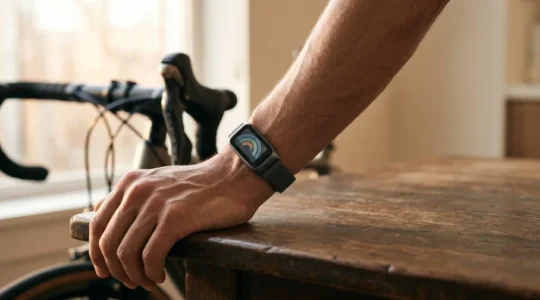
Whoop, Oura, or Garmin: Do You Need 24/7 Tracking to Be a Better Cyclist?
The biggest performance gains aren’t in your power meter, but in the data your body produces while you sleep. Raw metrics are useless without a system to interpret them; focus on trends over volatile daily scores to build data-driven intuition….
Read more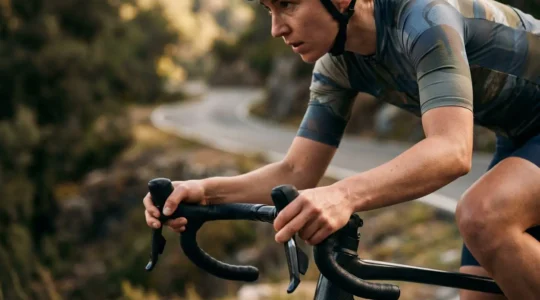
Control in the Drops: Why 24 Degrees of Flare Changes Your Descending Confidence?
The common belief that simply adding flared bars will fix descending instability is a critical misunderstanding. True control comes not from the flare itself, but from systematically re-engineering your entire cockpit—stem, levers, and stack height—to work with it. Ignoring the…
Read more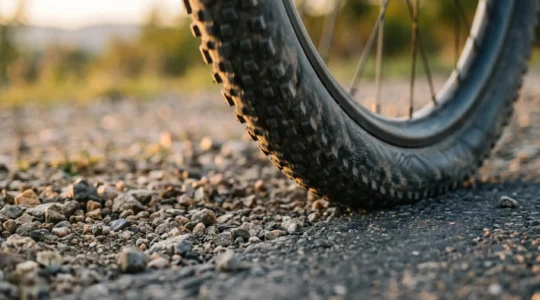
Pressure Drop: Why 45mm Tyres at 25psi Are Faster Than You Think?
The fastest tyre is not the hardest; it’s the one that minimizes energy loss from vibration (impedance) on real-world surfaces. Losses from the bike and rider bouncing over imperfections (impedance) far outweigh losses from tyre flex (casing hysteresis). Wider tyres…
Read more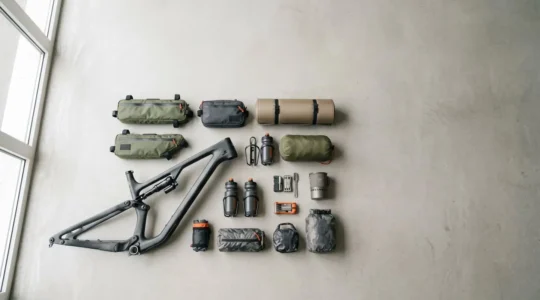
Tetris for Bikes: How to Fit Gear onto a Small Frame or Full-Suspension?
In summary: Protect your frame with multi-layer tape; friction between straps and paint is an unavoidable physical reality. Sculpt your bags by packing dense, hard items centrally to create a tapered profile that avoids knee rub. Prioritize a low center…
Read more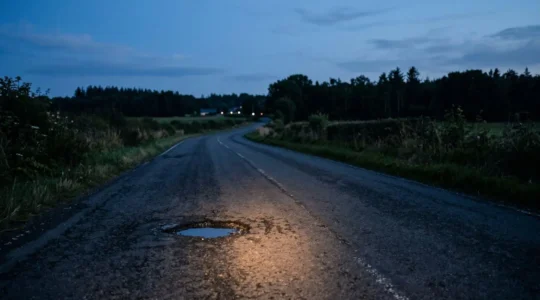
Lumens vs. Lux: What Do You Actually Need to See Potholes in the Dark?
The cycling industry’s focus on high lumen counts is a distraction. For riding on unlit roads, raw power is secondary to precision optical control. A lower-lumen light with an engineered, non-blinding beam shape (lux on target) will provide superior ground…
Read more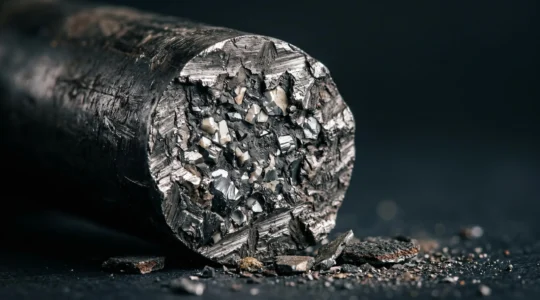
Angle Grinder Attacks: Can Any Lock Withstand a Portable Power Tool?
Contrary to viral videos, a lock’s security isn’t about being “unbreakable,” but about making the theft process so materially difficult, noisy, and time-consuming that it becomes impractical. Modern “grinder-resistant” locks use ceramic composites to destroy cutting discs, not just resist…
Read more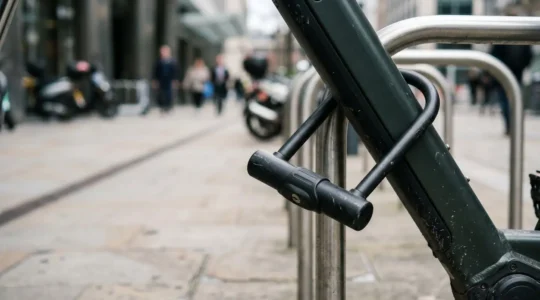
D-Lock or Chain: Which Offers the Best Protection for a £2,000 E-Bike?
The most secure lock for your e-bike isn’t the one that’s unbreakable, but the one whose failure mode is the most difficult, time-consuming, and loudest for a thief to exploit. Material science dictates that a shackle or link thickness of…
Read more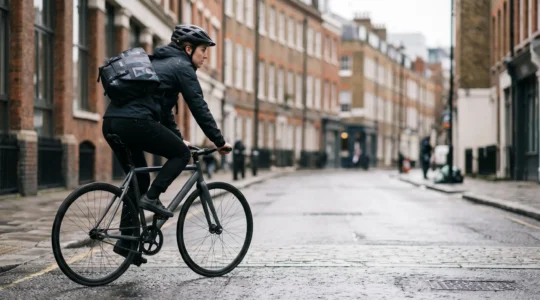
Why Do London Couriers Still Choose Messenger Bags Over Backpacks?
The messenger bag isn’t a fashion statement; it’s a high-performance tool meticulously designed for urban momentum. It enables the “swing-and-grab” maneuver for instant, one-handed access to contents without stopping or dismounting, a feat impossible with a backpack. When packed correctly…
Read more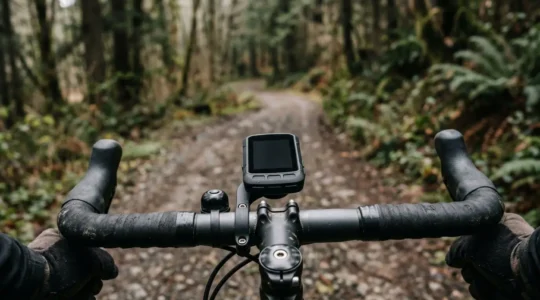
Garmin vs. Wahoo: Which Computer Is Actually User-Friendly for Non-Techies?
The best bike computer isn’t the one with the most features, but the one that fails most gracefully when you’re tired, lost, and in the rain. User-friendliness is defined by how a device handles sensor dropouts and bad re-routing, not…
Read more
Is MIPS Worth the Extra £30 for a Commuter or Road Helmet?
The £30 for MIPS isn’t for a plastic liner; it’s a targeted investment against the primary cause of concussion in most cycling falls: rotational shear strain on the brain. MIPS technology specifically addresses angled impacts and rotational forces, which standard…
Read more