Contrary to viral videos, a lock’s security isn’t about being “unbreakable,” but about making the theft process so materially difficult, noisy, and time-consuming that it becomes impractical.
- Modern “grinder-resistant” locks use ceramic composites to destroy cutting discs, not just resist them.
- A 16mm hardened steel shackle defeats manual bolt cutters due to fundamental principles of shear strength and leverage.
- Lock geometry (square vs. round) and dual-locking mechanisms are as critical as the material itself in preventing a successful cut.
Recommendation: Select a lock based on its material science and mechanical design—not just its thickness—to create a robust security system against specific attack vectors.
The chilling screech of an angle grinder slicing through a high-end bike lock in seconds has become a viral nightmare for every cyclist. Videos proliferate online, showcasing brazen thieves armed with portable power tools, rendering a £1,000 bike vulnerable in broad daylight. The immediate reaction is one of terror and a desperate search for a bigger, thicker lock. Many believe the solution lies in simply layering security or buying a lock with a “Diamond” rating, hoping a sticker will deter a 11,000 RPM disc.
This approach, however, misses the fundamental point. We are witnessing an arms race not of brands, but of materials and mechanics. To truly secure your investment, you must stop thinking like a consumer and start thinking like a metallurgist. The fight against a power tool isn’t won by a brand name, but by understanding the scientific principles of abrasive resistance, shear strength, and mechanical redundancy. It’s about exploiting the weaknesses of the tool, not just reinforcing the target.
But what if the key wasn’t simply a thicker shackle, but a smarter material that actively fights back? What if the lock’s very shape could make it impossible for a thief’s tool to get a clean bite? This guide moves beyond the marketing hype to dissect the physics and material science of lock security. We will explore how next-generation materials are changing the game, why certain designs defeat specific tools, and how you can make an engineering-led decision to protect your bike effectively.
This article will guide you through the critical engineering principles that define a truly secure lock. By understanding the science, you can move from a position of fear to one of empowered confidence in your security choices.
Summary: A Metallurgist’s Analysis of Modern Bike Lock Security
- Litelok vs. Hiplok: Are the New “Grinder Resistant” Materials Worth £250?
- Leverage Limits: Why 16mm Shackles Defeat Manual Bolt Cutters
- Salt Spray: Why Cheap Steel Locks Seize Up After One UK Winter
- The Shape Factor: Why Square Links Are Harder to Cut Than Round Ones?
- Dual Locking: Why Cutting One Side of the Shackle Isn’t Enough on Top Locks
- Mini vs. Standard: Why a Smaller Shackle Might Be Harder to Attack?
- Carbon Repair vs. Replacement: What to Do After a Crash?
- D-Lock or Chain: Which Offers the Best Protection for a £2,000 E-Bike?
Litelok vs. Hiplok: Are the New “Grinder Resistant” Materials Worth £250?
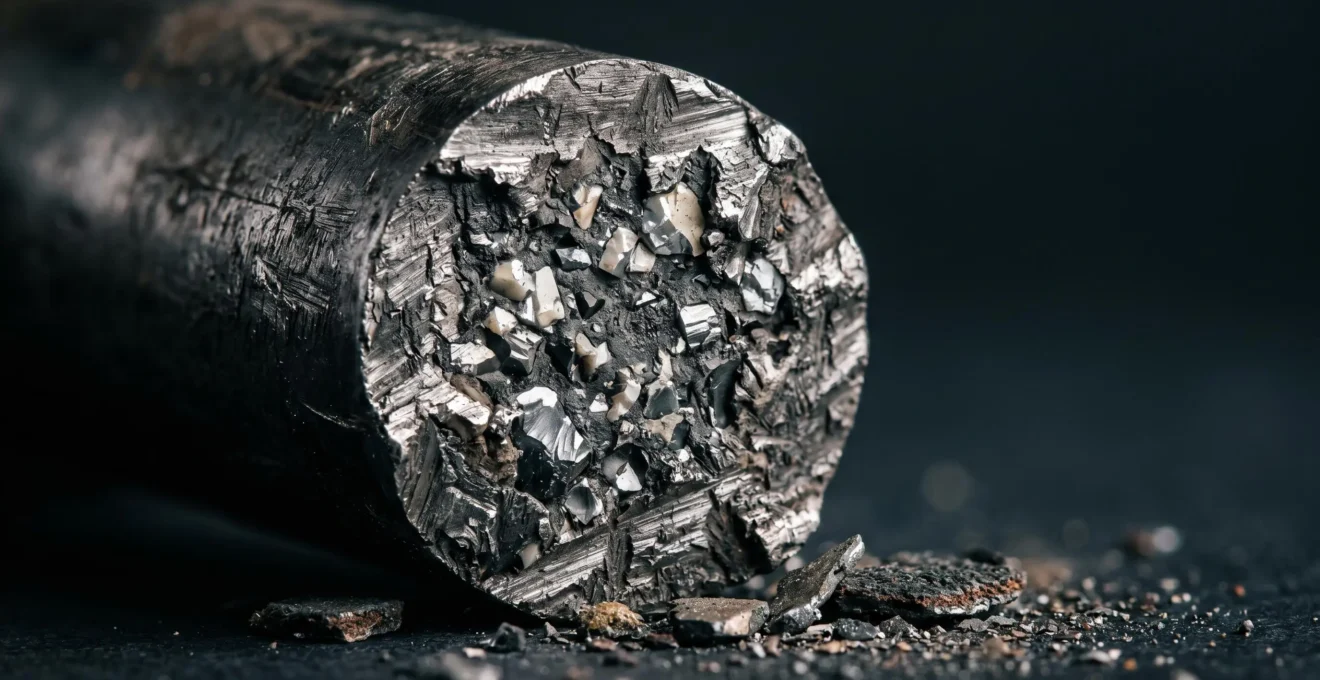
The recent emergence of “grinder-resistant” locks from brands like Litelok and Hiplok represents the most significant leap in security material science in decades. For a price point often exceeding £250, the question is whether the technology justifies the cost. The answer lies in a fundamental shift from passive resistance to active defense. Traditional hardened steel locks resist cutting by being hard. These new locks resist cutting by destroying the tool itself. They achieve this using a fused composite material, often a ceramic-steel hybrid like Litelok’s Barronium.
This material features extremely hard ceramic particles embedded within the steel. When an angle grinder disc hits the surface, it doesn’t just cut; it encounters a material that is harder than its own abrasive coating. The result is catastrophic failure of the cutting disc, which rapidly wears down, shatters, or overheats. In fact, independent testing shows Litelok’s X1 is at least 5 times more angle grinder resistant than many leading D-locks, requiring multiple discs and battery changes for a single cut. This introduces immense friction and time into the theft process.
This approach perfectly embodies a core security philosophy. As the Hiplok Security Research Team notes in their blog, “Angle Grinder Proof Bike Locks”:
Resistance is about buying time, increasing effort, and making theft less attractive, not guaranteeing safety.
– Hiplok Security Research Team, Hiplok Blog
For a terrified cyclist, this is the crucial takeaway. A £250 investment doesn’t buy invincibility; it buys time and noise. It transforms a potential 30-second theft into a 5-minute, multi-disc, battery-draining ordeal, dramatically increasing the thief’s risk of being caught. In high-risk urban environments, that time is often the most effective deterrent of all.
Leverage Limits: Why 16mm Shackles Defeat Manual Bolt Cutters
While angle grinders dominate the headlines, the most common tool for opportunistic thieves remains the bolt cutter. Understanding why a 16mm hardened steel shackle is the industry benchmark for defeating them requires a brief lesson in mechanical engineering. A bolt cutter is a simple lever, multiplying the force applied by the user’s arms. However, this force is not infinite. To shear a piece of steel, the cutter’s jaws must exert more force than the material’s inherent shear strength.
For the hardened steel used in quality locks, this is a significant barrier. A mechanical engineering analysis reveals that up to 4,000-5,000 Newtons of shear force may be required to cut through typical hardened fastener steel. Even with a large 42-inch bolt cutter, a human operator struggles to generate this level of force. The second critical factor is material hardness. High-security shackles are hardened to a level on the Rockwell C scale (HRC) that approaches, or even exceeds, the hardness of the cutter’s own jaws.
According to security analyses, a top-tier padlock shackle may have a core hardness over HRC 55. The jaws of bolt cutters capable of defeating this must be even harder, typically rated between HRC 58 and HRC 62. When a softer jaw attacks a harder shackle, the jaw is more likely to be dented, chipped, or dulled than to successfully bite into and shear the steel. For shackles of 16mm diameter or more, the combination of required shear force and material hardness places them beyond the physical capabilities of all but the largest, hydraulically-assisted cutters, which are not manually portable.
Salt Spray: Why Cheap Steel Locks Seize Up After One UK Winter
A lock’s greatest enemy may not be a thief, but the environment itself. For cyclists in the UK, a single winter of rain, road salt, and coastal air can be a death sentence for a low-quality lock. The mechanism seizes, the key refuses to turn, and the once-mighty shackle is fused shut by corrosion. This failure is a direct result of inadequate material selection and protective coating, a factor often overlooked in the focus on cut resistance.
The industry standard for measuring corrosion resistance is the salt spray test, defined by standards like ASTM B117. During this test, a product is placed in a closed chamber and subjected to a continuous, atomized saltwater fog. This controlled environment accelerates the corrosion process, simulating months or years of harsh environmental exposure in a matter of hours or days. According to ASTM B117 corrosion resistance standards, testing durations can range from 24 hours for basic coatings to over 1,000 hours for high-performance marine-grade finishes.
A cheap lock might use low-grade steel with a thin layer of chrome plating that passes a minimal 24-hour test. However, a single scratch or chip in this coating exposes the vulnerable steel underneath. Once moisture and salt penetrate, galvanic corrosion begins, rapidly turning the smooth internal pins and springs of the locking cylinder into a solid block of rust. Premium locks use higher-grade stainless steel components, more robust multi-layer coatings (like rubber or vinyl over zinc plating), and weather seals on the keyway to survive hundreds of hours in the salt spray chamber, ensuring they still function smoothly after multiple winters.
The Shape Factor: Why Square Links Are Harder to Cut Than Round Ones?
When assessing a lock’s resistance to cutting, metallurgy is only half the story; geometry is the other. The cross-sectional shape of a chain link or a D-lock shackle has a profound impact on how it interacts with a cutting tool, whether it’s a bolt cutter or an angle grinder. While a round profile may seem robust, it is geometrically the weakest shape against these attacks.
When the curved jaws of a bolt cutter engage a round link, they create two small, focused points of contact. This concentrates all the applied force into these tiny areas, acting like a wedge to split the material. A square or hexagonal link, however, forces the jaws to engage with a flat surface. This spreads the cutting force over a much larger area, dissipating the pressure and making it significantly harder to initiate a cut. The tool is more likely to slip, and a much greater closing force is required to achieve the necessary shear stress. As HSS Tool Hire Safety Guidelines state, “Hexagonal chains are difficult to get a suitable grip on with cutters.“
This principle is even more pronounced with an angle grinder. Independent tests have shown that the flat surfaces of square and hexagonal links force more of the grinder disc’s cutting edge to engage with the material at once. This dramatically increases friction, which in turn demands more torque from the grinder’s motor. The result is a slower, more difficult cut that drains the tool’s battery much faster. A round profile, by contrast, allows the disc to “roll” over its surface, creating a smaller contact patch and a more efficient, faster cut. This is why many high-security chains from brands like Pragmasis and Almax favour large, non-round link profiles.
Dual Locking: Why Cutting One Side of the Shackle Isn’t Enough on Top Locks
A common cost-cutting measure in cheap D-locks is a single-locking mechanism. In this design, only one end of the shackle actually locks into the crossbar. The other end simply slots into a hole, held in place by the rigidity of the shackle. The critical vulnerability here is that a thief only needs to make one cut. Once one side of the shackle is severed, it can be rotated out of the crossbar, and the bike is free. This turns a two-cut job into a one-cut job, halving the time and effort required for the theft.
Top-tier locks from all major brands (Kryptonite, Abus, Litelok, Hiplok) counter this with a dual-locking or double-deadbolt mechanism. In this superior design, both ends of the shackle engage with hardened steel bolts within the crossbar. This creates mechanical redundancy. Now, even if a thief manages the difficult task of cutting through one side of the hardened shackle, the lock remains secure. The shackle cannot be rotated or twisted out of the crossbar because the other side is still firmly locked in place.
This forces the thief to make a second cut on the other side of the shackle, doubling the cutting time, doubling the noise, and doubling the battery consumption of their angle grinder. As a result, locks with dual-locking mechanisms and anti-rotation features require cutting on both sides to be defeated. This simple principle of engineering redundancy is one of the most effective deterrents available. It directly attacks the thief’s most valuable asset: time. When evaluating a D-lock, a dual-locking mechanism is not a luxury feature; it is a fundamental requirement for high security.
Mini vs. Standard: Why a Smaller Shackle Might Be Harder to Attack?
In the world of security, intuition can be misleading. While a larger, thicker lock may seem more intimidating, a smaller “mini” D-lock is often significantly more secure against certain types of attack. The reason has nothing to do with the material’s cut resistance and everything to do with eliminating a thief’s primary weapon after cutting tools: leverage. A common attack vector against larger D-locks is the hydraulic bottle jack. A thief can place the jack inside the “D” of the lock and simply pump it, generating thousands of pounds of force that can burst the shackle or crossbar from the inside out.
A mini D-lock’s primary advantage is its lack of internal space. When locked correctly—with the shackle passed tightly around the bike frame and a solid anchor point—there is simply no room to insert a jack, a pry bar, or any other leverage tool. Security testing confirms that a properly fitted mini lock leaves minimal clearance, often under 5mm, which is insufficient for the operation of a hydraulic jack. This deliberate elimination of space forces the thief to abandon leverage-based attacks, which are often silent and discreet, and rely exclusively on cutting attacks.
As we’ve established, cutting attacks with an angle grinder are noisy, conspicuous, and time-consuming. By choosing a mini D-lock and ensuring a snug fit, the cyclist removes the thief’s option for a quiet, powerful attack and forces them into a scenario where they are much more likely to be detected. The trade-off is flexibility; a mini lock can be harder to secure to bulky objects like lampposts. However, for a cyclist who primarily uses designated bike racks, the security advantage gained by minimizing leverage space is immense. In this case, less is truly more.
Carbon Repair vs. Replacement: What to Do After a Crash?
While the title suggests frame damage, the most critical “post-crash” assessment for a cyclist is what to do after your lock has survived a theft attempt. A lock that has been attacked, even if it wasn’t defeated, may have suffered invisible structural damage that compromises its future integrity. Simply continuing to use it because it “held up” is a dangerous gamble. A partial cut, thermal stress from a grinder, or torsional force from a leverage attempt can create micro-fractures or weaken the hardened steel, making a subsequent attack significantly easier.
As a metallurgist, my advice is unequivocal: any lock that shows signs of a determined attack must be considered compromised and replaced immediately. Visual inspection is not sufficient to guarantee its structural integrity. Heat from an angle grinder can alter the temper of the hardened steel, creating a softened zone that is much easier to cut next time. A failed leverage attack could have created stress fractures in the locking mechanism that are not visible from the outside. Trusting a damaged lock is like trusting a helmet after a major crash; the protection is no longer guaranteed.
Many top-tier lock manufacturers offer replacement programs for locks that have been damaged during a theft attempt, recognizing that the lock has sacrificed itself to protect the bike. A post-attack inspection is not about deciding if the lock is “still good”; it’s about documenting the attack for a warranty claim and getting a new, uncompromised lock. Your security system is only as strong as its weakest point, and a previously attacked lock is a significant weak point.
Your Action Plan: Post-Attack Lock Inspection Protocol
- Visual Surface Inspection: Examine the entire lock surface for partial cuts, grinding marks, heat discoloration (a blue or purple tint indicating thermal stress), or any deformation of the shackle’s cross-section.
- Mechanism Functionality Test: Insert and turn the key multiple times. Check for any roughness, binding, or misalignment that was not present before. Listen for unusual sounds indicating internal damage.
- Shackle Integrity Assessment: Gently attempt to twist or flex the shackle (without excessive force) to detect any new looseness or structural play not visible externally.
- Core Principle Check: Confront the lock’s state with its core purpose. Did it protect the asset? If yes, its primary job is done. Its secondary job is not to “try again”.
- Mandatory Replacement Rule: Any lock showing clear evidence of a cutting attempt, thermal damage, or mechanism irregularity must be immediately replaced, regardless of its apparent functionality.
Key Takeaways
- True security is not about a lock being “unbreakable” but about making an attack so time-consuming, noisy, and difficult that it’s not worth the risk.
- Material science is paramount: ceramic-composite locks defeat grinders by destroying the cutting disc, a superior strategy to simple hardness.
- Mechanical design is as crucial as material: dual-locking mechanisms and non-round shackle profiles double a thief’s workload.
D-Lock or Chain: Which Offers the Best Protection for a £2,000 E-Bike?
For the owner of a high-value e-bike, the choice between a top-tier D-lock and a heavy-duty chain is a critical one. With official crime statistics showing that 66,960 bicycle thefts were recorded in England and Wales in 2023/24, this decision is not academic. Both formats can offer Sold Secure Diamond-rated protection, but they do so with different strengths and weaknesses rooted in the engineering principles we’ve discussed. The best choice depends entirely on the use case: mobile urban security versus stationary home storage.
A grinder-resistant D-lock is the superior choice for portability and on-the-go security. It leverages advanced material science in a lightweight, frame-mountable package. A heavy-duty chain, typically with 19mm+ links, offers immense resistance to manual cutters but is extremely heavy, making it impractical for daily commuting. However, its flexibility is a key advantage, allowing it to be secured around a wider variety of objects. The ultimate security setup for a £2,000 e-bike is often a combination of both: a heavy-duty chain and ground anchor for home, and a high-tech, lightweight D-lock for the road.
The following table, based on comparative data and security testing, breaks down the key differences to help guide your decision. A recent analysis by Cycling Weekly highlights these trade-offs in real-world tests.
| Security Factor | Grinder-Resistant D-Lock | Heavy-Duty Chain (19mm+) |
|---|---|---|
| Portability | Excellent – Lightweight (1.3-1.7kg), frame mountable | Poor – Heavy (3-5kg+), requires bag transport |
| Grinder Resistance | Superior – Composite materials destroy multiple discs | Good – Thick hardened steel requires extended cutting time |
| Bolt Cutter Resistance | Excellent – 16mm+ shackle exceeds manual cutting capacity | Excellent – 19mm links exceed manual cutting capacity |
| Flexibility of Locking | Limited – Fixed shackle dimensions restrict anchor options | Excellent – Wraps around irregular objects and multiple bikes |
| Best Use Case | Urban commuting, high-risk short-term parking | Home/garage security, long-term stationary storage |
| Typical Price (Diamond-rated) | £150-£250 | £120-£300 |
Ultimately, protecting a valuable e-bike requires a systems-thinking approach. The lock is one component in a strategy that also includes location, locking technique, and having the right tool for the specific environment, whether that’s the street or your garage.