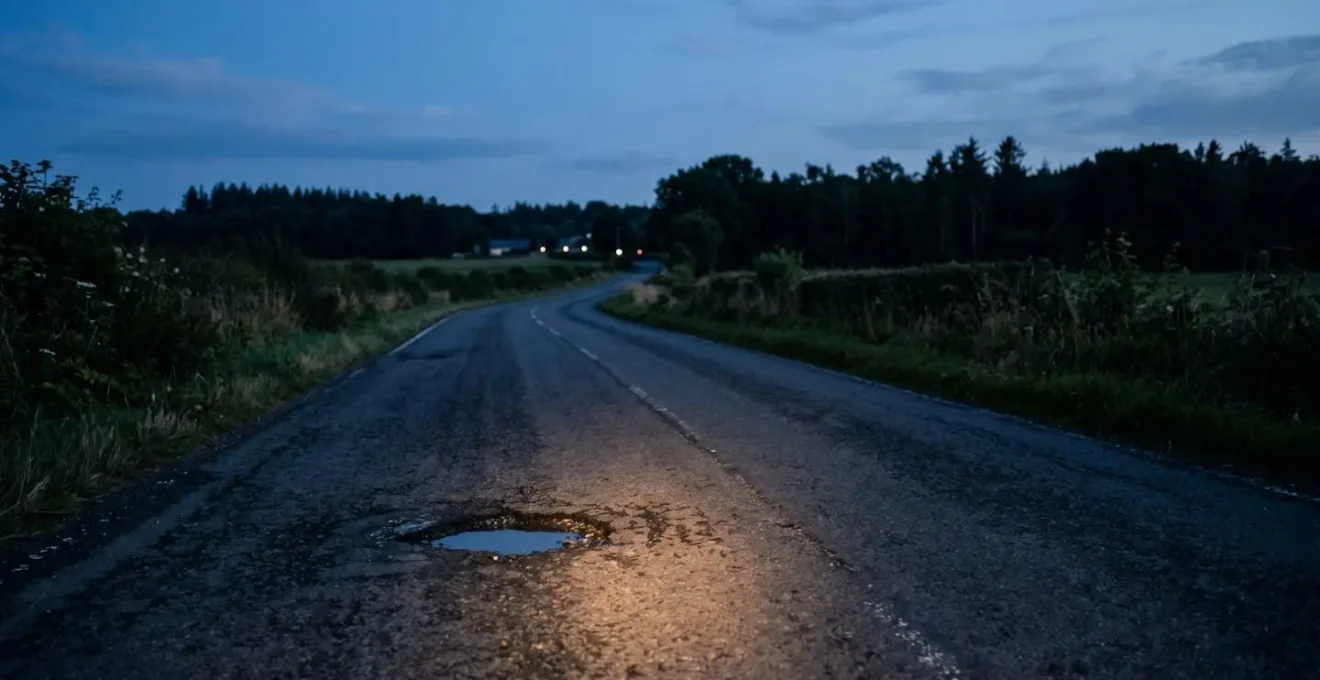
The cycling industry’s focus on high lumen counts is a distraction. For riding on unlit roads, raw power is secondary to precision optical control. A lower-lumen light with an engineered, non-blinding beam shape (lux on target) will provide superior ground illumination and safety compared to a high-lumen light with a simple circular beam. The key is managing where the light goes, not just how much is produced.
For any commuter who has ventured onto an unlit country lane, the fear is universal: the sudden, bone-jarring impact of an unseen pothole. The conventional wisdom, pushed by marketing departments, is a simple equation: more darkness requires more lumens. This has sparked a veritable arms race, with lights boasting 1000, 1500, or even 2000 lumens, promising to turn night into day.
But this obsession with lumens is fundamentally flawed. As a light optics engineer, I can tell you that simply blasting more light forward is an inefficient, and often dangerous, strategy. It’s the equivalent of using a fire hose to water a houseplant. The true measure of a useful light isn’t its total output (lumens), but the precision with which that light is placed on the road surface (lux). It’s about optical control, thermal management, and understanding human perception.
This guide abandons the marketing hype. Instead, we will deconstruct the light as an engineering system. We’ll explore why a German-standard beam shape is your best tool, how batteries and heat conspire against you, and why the movement of your ankles is more visible to a driver than a bright jacket. It’s time to stop buying brightness and start investing in visibility.
This article provides a complete engineering breakdown of what constitutes an effective lighting system for navigating unlit paths. The following sections will guide you through the critical concepts of optical control, power management, and strategic visibility.
Summary: A Technical Guide to Bike Lights for Unlit Roads
- The Cut-Off Line: How to See the Road Without Blinding Oncoming Drivers?
- 1000 Lumens for How Long? Decoding Battery Life Claims on High Power
- The Follow-Spot: Why You Need a Helmet Light for Twistytrails?
- Flashing Modes: Do Super-Bright Day Lights Actually Reduce Accidents?
- Vibration Proof: Why Your Light Droops on Bumps and How to Fix It
- Bio-Motion: Why Reflective Ankles Are 5x More Visible Than a Jacket Strip
- Low Power: Which Lights Automatically Dim to Save the Last 15 Minutes?
- How to Be Seen on Dark Country Lanes Without Looking Like a Construction Worker?
The Cut-Off Line: How to See the Road Without Blinding Oncoming Drivers?
The single most important feature of a headlight for unlit roads is not its maximum lumen output, but its beam shape. Most high-power lights use simple, circular reflectors that create a bright “hot spot” surrounded by a halo of wasted light. This design throws a significant portion of its output into the trees and, more critically, into the eyes of oncoming drivers and cyclists. An engineered beam is different; it employs precision lenses and reflectors to shape the light, creating a distinct horizontal “cut-off” line.
This concept is mandated in Germany by the stringent StVZO (Strassenverkehrs-Zulassungs-Ordnung) regulations for road-legal vehicles, including bicycles. The goal is to function like a car’s dipped headlight beam: illuminate the road surface intensely and broadly, without directing any stray light above the horizontal plane. A light designed to this standard puts the lux where you need it—on the tarmac to reveal potholes and debris—while preventing dangerous glare for others. In fact, to be compliant, the light emitted above the cut-off must be incredibly low; ≤2 lux is the maximum allowable glare when measured at a specific distance. This is the hallmark of sophisticated optical engineering.
You can perform a basic check on your own light’s beam quality. It’s a simplified version of the official test but reveals the fundamental optical design:
- Position your bike 10 meters from a vertical wall in a dark environment.
- Mount the light at its intended handlebar height (typically 90-110cm).
- Aim the light so the top edge of the brightest spot is positioned on the wall slightly below the height of the light itself.
- Observe the top edge of the beam. Is it a sharp, horizontal cut-off, or a fuzzy, circular halo? A sharp line indicates good optical control.
- The illuminated pattern should be wide and rectangular, not a cone. This indicates the light is being shaped to cover the road, not just project a spot.
1000 Lumens for How Long? Decoding Battery Life Claims on High Power
A light’s claimed runtime is one of its most critical specifications, yet it’s often the most misleading. The challenge is heat. A high-power LED is not a perfectly efficient device; a significant portion of the electrical energy it consumes is converted into heat, not light. This heat must be dissipated, typically through an aluminum casing with cooling fins. If the heat cannot be dissipated fast enough (especially when stationary or moving slowly), the LED’s temperature will rise, reducing its efficiency and potentially damaging the electronics.
To prevent this, almost all high-power lights incorporate thermal throttling. A temperature sensor on the circuit board monitors the heat and will automatically reduce the power output—and thus the lumens—to maintain a safe operating temperature. This means your “1000 lumen” light might only produce that output for the first 5-10 minutes of a ride before throttling down to 800, 700, or even fewer lumens for the remainder. The advertised runtime is for the mode, not necessarily for the peak lumen output of that mode. The quality of the thermal design—the size of the heat sink, the efficiency of the driver electronics—determines how well a light can sustain its output.
Furthermore, understanding how manufacturers measure runtime is crucial. Most reputable brands adhere to the ANSI FL1 standard, which provides a consistent methodology. This is a critical piece of information for any consumer trying to make a fair comparison between products.
Runtime is measured from activation with fresh batteries until the instant the output drops to 10% of the lumen rating in continuous operation.
– ANSI FL1 Standard, as explained by Elzetta Tactical Lighting
This definition means the claimed runtime includes the period where the light is significantly dimmer than its initial output. A light with superior thermal management and a more efficient LED/driver combination will hold a higher lumen output for a larger percentage of its stated runtime.
The Follow-Spot: Why You Need a Helmet Light for Twistytrails?
While a powerful, well-shaped handlebar light is the foundation of any night-riding system, it has a fundamental limitation: it only points where the handlebars are pointing. On straight roads, this is perfect. But on winding country lanes or twisty towpaths, you often need to see “through” the corner, looking towards the exit while the bike is still angled into the turn. This is where a helmet-mounted light becomes an indispensable tool.
A helmet light acts as a “follow-spot,” decoupled from the bike’s orientation and slaved directly to your line of sight. This allows you to scan the road ahead, check for side turnings, or make eye contact with a driver at a junction, all while your main handlebar beam continues to illuminate the path immediately in front of you. This dual-light philosophy is standard practice in mountain biking, but its principles are equally valid for any commuter navigating complex, unlit environments.
Case Study: The Handlebar Flood + Helmet Spot Configuration
In professional testing environments, the consensus is clear: the optimal setup for technical terrain combines two different types of beams. As demonstrated in rigorous evaluations of light patterns, the ideal configuration uses a wide-beam “flood” light on the handlebars to provide broad peripheral illumination of the immediate trail or road edges. This is paired with a focused, narrow-beam “spot” light on the helmet. This allows the rider to project a concentrated beam of light exactly where they are looking—deep into a corner or towards a distant object—without sacrificing awareness of their immediate surroundings.
For the commuter, this means the handlebar light provides the main “seeing” beam with a proper cut-off, while a smaller, lighter helmet light (100-400 lumens is often sufficient) acts as a highly-versatile utility and safety light. It allows you to look into dark farm gateways as you pass or quickly illuminate a dropped key when stopped. It transforms your lighting from a static system into a dynamic one that responds to your immediate focus of attention.
Flashing Modes: Do Super-Bright Day Lights Actually Reduce Accidents?
While a steady beam is essential for you to see the road, a flashing light is critical for others to see you. The advent of super-bright Daytime Running Lights (DRLs) has shifted the conversation from simple blinking to the science of perceptual conspicuity. The question is no longer just about being visible, but about being noticed and correctly identified as a cyclist by a driver’s brain.
The data is compelling. DRLs, which are designed to be seen in bright daylight, work by using an irregular, high-intensity flash pattern. This pattern is specifically engineered to interrupt a driver’s visual field and trigger an involuntary notice response. It breaks through the visual clutter of a daytime scene. Controlled studies have shown this is not a placebo; it has a measurable impact on safety. For instance, a 2025 controlled study in Denmark linked the use of DRLs on bicycles to a 19% reduction in personal injury accidents involving multiple parties.
The effect is even more pronounced in the conditions our commuter faces: darkness. While a steady light is necessary, adding a flashing light dramatically increases the distance at which a driver can detect and recognize a cyclist. The key is that the flash provides a dynamic signal that is easily differentiated from static background lights like reflectors or streetlights. In fact, comprehensive research on the topic, also published in 2025, shows an astonishing 71% risk reduction for accidents in the dark when cyclists used DRLs. This highlights that a dual approach—a steady beam to see and a separate, disruptive flash to be seen—offers a significant safety advantage on unlit roads.
Vibration Proof: Why Your Light Droops on Bumps and How to Fix It
An optically perfect, thermally stable 1000-lumen headlight is utterly useless if its mount allows it to droop and point at the front wheel after the first pothole. The mechanical interface—the mount—is a component that is as critical as the electronics and optics, yet it is often an afterthought. For a commuter on rough country lanes, a vibration-proof mount is not a luxury; it’s a fundamental requirement.
The common culprit is the ubiquitous silicone strap mount. While cheap, lightweight, and easy to install, its inherent elasticity can be its downfall. Under the weight of a heavier light and subjected to high-frequency vibrations from a rough road surface, the strap can stretch or the entire mount can rotate around the handlebar, causing the dreaded “light droop.” More secure systems, like screw-based clamps or standardized interfaces like Quarter-Turn mounts, offer a much more robust solution, though often at the cost of convenience or increased weight.
The following table, based on extensive analysis of various light mounting systems, breaks down the engineering trade-offs of each common type.
| Mount Type | Pros | Cons | Best For |
|---|---|---|---|
| Silicone Strap | Universal fit, tool-free installation, won’t scratch bars, absorbs some vibration | Can stretch over time, may slip on oversized or aero bars, less secure for heavy lights | Lightweight commuter lights, regular round handlebars, temporary mounting |
| Screw Clamp | Very secure, no slippage, excellent for heavy lights, long-term stability | Requires tools, limited adjustability, can scratch carbon bars, fixed to one diameter | High-power trail lights, permanent setups, riders who prioritize security over convenience |
| Quarter-Turn / GoPro | Quick on/off, easy to remove for security, standardized interface, good adjustability | Can develop play over time, tab breakage risk, requires compatible mount base | Multi-bike use, urban environments where theft is a concern, riders who remove lights frequently |
Regardless of the mount type, there are several engineering-inspired tricks you can use to improve its stability and prevent unwanted movement on bumpy terrain.
Your Action Plan: Vibration-Proofing Your Light Mount
- Add a Friction Layer: Cut a 2-3cm section from an old inner tube and wrap it around the handlebar where the mount makes contact. This rubber layer adds grip and provides excellent vibration damping.
- Increase Static Friction: For clamp-style mounts, apply a thin layer of carbon assembly paste (also known as friction paste) to the contact surfaces. This gritty paste dramatically increases friction, allowing a secure fit without over-tightening bolts.
- Pre-load Elastic Mounts: If your silicone strap has stretched, wrap it once completely around the handlebar before engaging the hook. This extra turn adds tension and tightens the fit.
- Use a Shim: For undersized handlebars, create a shim by wrapping several layers of high-quality electrical tape around the bar to build up its diameter, ensuring a snug fit for the mount.
- Minimize Leverage: Position heavy lights as close to the stem as possible. This shortens the leverage arm, significantly reducing the rotational force induced by bumps and vibrations.
Bio-Motion: Why Reflective Ankles Are 5x More Visible Than a Jacket Strip
When it comes to being seen in the dark, not all reflectivity is created equal. A static reflective strip on the back of a jacket is good, but it’s not optimal. The human brain’s visual system is exceptionally good at one thing: detecting the characteristic movement of a living creature. This is a deeply ingrained evolutionary trait. We can recognize a person walking from a great distance based on just a few points of light attached to their joints. This phenomenon is known as bio-motion recognition.
For a cyclist, the most distinct and recognizable movement is the circular, up-and-down motion of the feet and lower legs. By placing reflective material on your ankles, you are essentially attaching bright markers to the key pivot points of this biological signature. A driver’s brain will subconsciously and instantly piece together these moving points of light and register them as “human on a bicycle,” a far more powerful and urgent signal than a single, static reflective patch. This isn’t theory; studies in perception psychology have repeatedly demonstrated that highlighting biological motion drastically increases detection and recognition distance.
The most effective strategy, as detailed in expert guides on visibility and conspicuity, is a three-point system. The primary and most crucial point is the ankles, capturing the main pedaling motion. Secondary points on the knees add the up-and-down component. Tertiary points on the hands or wrists are also beneficial, as they introduce lateral movement and are useful for signaling. This “constellation” of moving reflective points creates an unmistakable animated human form, cutting through the nighttime visual noise far more effectively than a large, static panel on the torso.
Low Power: Which Lights Automatically Dim to Save the Last 15 Minutes?
One of the greatest anxieties of riding on unlit roads is the sudden, total failure of your headlight. A battery doesn’t care if you are miles from home. This “digital cliff,” where a light goes from fully functional to completely dead with little warning, is a sign of a poorly designed Battery Management System (BMS). A sophisticated lighting system, however, is engineered to fail gracefully.
Advanced lights incorporate intelligent power management that provides a predictable, gradual step-down in output as the battery nears depletion. Instead of a sudden cutoff, the light will automatically drop to a lower power mode, providing a “limp-home” or “reserve” functionality. This is designed to give the rider a crucial safety margin—typically 15 to 30 minutes of usable, albeit reduced, light to get off a trail or reach a safe, well-lit area. This feature demonstrates a design philosophy that prioritizes user safety and predictability over maximizing runtime figures on a spreadsheet.
Case Study: The ‘Get Home Mode’ Philosophy
Some forward-thinking manufacturers have made this a core part of their product design. For example, Outbound Lighting’s ‘Get Home Mode’ is a well-documented implementation of this concept. When the battery is nearly exhausted, their system provides a clear warning signal (a series of pulses) before automatically dropping to a low-power state. This state is engineered to last for at least 20 minutes, providing a predictable safety buffer. This is not simply a low-battery indicator; it is a managed, final stage of operation that acknowledges the realities of night riding and prioritizes getting the rider home safely.
When evaluating lights, look for terms like “Reserve Mode,” “Safe Mode,” or “Emergency Mode” in the specifications. The presence of these features indicates a more advanced BMS and a greater consideration for real-world failure scenarios. It’s a hallmark of a product engineered for reliability, not just peak performance.
Key Takeaways
- Optical Control Over Raw Power: A well-shaped beam with a sharp StVZO-style cut-off is superior to a brighter, unfocused beam for illuminating the road and preventing glare.
- Sustained Output Matters: Claimed lumens are irrelevant if a light’s poor thermal management causes it to dim significantly after a few minutes. Look for good heat sink design.
- Visibility is a System: Combine active lighting (to see) with passive, motion-based reflectivity (to be seen) for maximum safety on dark roads.
How to Be Seen on Dark Country Lanes Without Looking Like a Construction Worker?
Achieving maximum visibility on a dark road does not require dressing head-to-toe in solid, fluorescent yellow. In fact, from an engineering and perceptual standpoint, that can be a suboptimal strategy. A more effective approach is a layered, intelligent system that combines three key elements: contrast, color, and motion. This “visibility triangle” leverages how the human eye and brain perceive objects in low light, allowing for a more sophisticated and effective presence without sacrificing aesthetics.
The first element, Contrast, involves using clothing with strategic light and dark panels. A solid block of hi-vis can paradoxically flatten your shape to a driver. Garments that use contrasting panels to outline the human form—the torso, arms, and legs—are more effective at defining you as a person. The second element is Color. Fluorescent materials in yellow, orange, or pink are most effective during the low-light transition periods of dawn and dusk. They work by converting invisible UV light into visible light, making them “glow.” However, in full darkness with no UV light to convert, their advantage diminishes, and reflectivity takes over.
This brings us to the third and most crucial element for dark lanes: Motion. As discussed with bio-motion, positioning high-quality reflective materials exclusively on moving parts is the single most effective way to be seen at night. Ankles, feet, and knees are primary. This strategy, as advocated by numerous cycling safety analyses, triggers instant recognition. Modern “stealth reflective” materials, which appear black or grey in daylight but reflect brightly when hit by headlights, allow for this to be integrated subtly into stylish apparel. By combining these three elements, you create a comprehensive system that works across all light conditions, making you maximally visible without looking like you’ve just left a building site.
You now possess the engineering framework to evaluate any lighting system beyond its superficial lumen rating. Your next step is to critically assess your own setup. Is your beam shaped for the road or the sky? Is your mount truly secure? Are you leveraging the power of bio-motion? Applying these principles will do more for your safety and confidence on dark roads than simply buying the brightest light on the market.