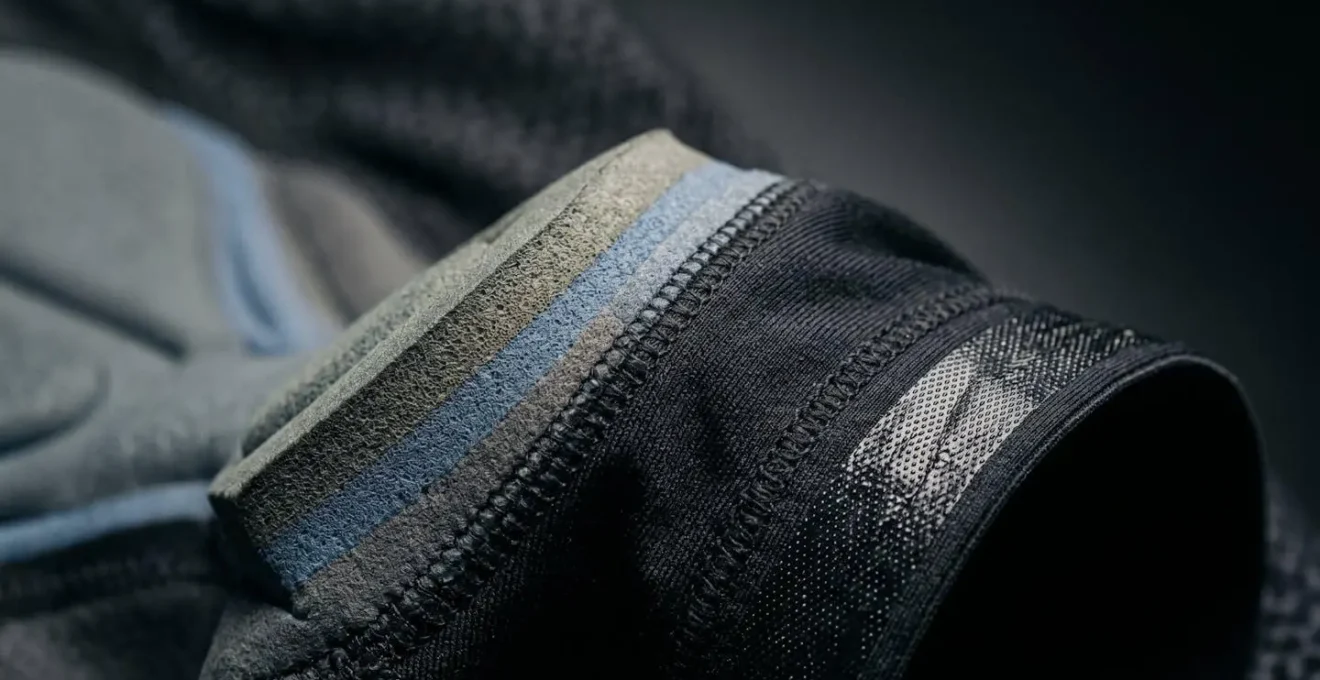
The fastest way to eliminate saddle sores and dramatically increase comfort is not to buy a new saddle, but to invest that same money in a single, high-quality pair of bib shorts.
- The chamois pad is a technical component where high-density foam provides structural support, unlike the cheap, thick padding that causes numbness.
- Proper compression is a support system for your muscles, actively reducing fatigue, while a clean pair for every ride prevents the bacterial infections that cause sores.
Recommendation: Before changing your bike’s hardware, upgrade the critical interface between your body and the machine: your shorts. The performance gain per pound spent is unmatched.
Let’s be honest. You’ve felt it. That nagging discomfort an hour into a ride. The constant shifting in the saddle, trying to find a position that doesn’t ache. And the tell-tale soreness afterwards that makes you wince just thinking about getting back on the bike tomorrow. The immediate, logical conclusion for almost every rider is simple: “My saddle is the problem.” You start a multi-week quest, diving into online reviews, forum debates, and saddle-fitting guides, ready to spend £100 or more on the promise of a miracle cure.
I’ve been there. I’ve got a box of “failed” saddles in my garage to prove it. After tens of thousands of miles on everything from smooth European tarmac to rough British B-roads, I can tell you with absolute certainty: you’re likely blaming the wrong piece of equipment. Your saddle isn’t the problem; it’s the victim. The real key to comfort, performance, and ending the cycle of saddle sores lies in what sits between you and the saddle. It’s the true body-bike interface: your bib shorts.
This guide will challenge the conventional wisdom. We won’t be looking at saddle catalogues. Instead, we’ll break down the engineering, science, and hard-won experience that proves why that £100 is far better invested in a single, elite pair of bib shorts. We’ll explore pad technology, the misunderstood role of compression, the vital importance of hygiene, and how the right clothing is a piece of performance equipment, not just an accessory.
This article breaks down the essential, often-overlooked details of cycling apparel that have a greater impact on your comfort and performance than many expensive bike upgrades. The following sections provide a complete overview.
Summary: Why Spending £100 on Bib Shorts Is Better Than Upgrading Your Saddle?
- Thick vs. Thin Pads: Why More Padding Sometimes Causes More Numbness
- The Sausage Leg Effect: How Tight Should Bib Shorts Be for Muscle Support?
- The Cutaway Difference: Why Unisex Shorts Are a Disaster for Female Riders
- Saddle Sores: Why Wearing Your Shorts Twice Is a Bacterial Time Bomb
- Bib Tights or Leg Warmers: Which Is More Practical for Variable UK Spring Days?
- Loose Jersey vs. Race Fit: Which Costs You More Watts at 20mph?
- The Wet Wipe Shower: Staying Clean When You Are 2 Days from a Bathroom
- How to Finish Your First 100-Mile Sportive Without hitting the Wall?
Thick vs. Thin Pads: Why More Padding Sometimes Causes More Numbness
The most common misconception in cycling comfort is that more padding is better. It seems intuitive: if it hurts, add a cushion. But in practice, this leads to the exact problems you’re trying to solve. Cheap, bulky pads are typically made of low-density, open-cell foam. They feel plush when you first put them on, but under your body weight on the saddle, they compress into a thin, useless layer. Worse, this sponge-like material traps heat and moisture, and its lack of structure allows it to bunch up, creating new pressure points and chafing where none existed before. This is a classic cause of numbness, as the bunched material presses on nerves and restricts blood flow.
This is where engineered comfort triumphs over bulk padding. A high-quality chamois uses multi-density, closed-cell foam. It’s not about thickness; it’s about structural support. According to leading manufacturers, some premium pads feature foam with up to 200 kg/m³ density in key areas. This high-density foam acts less like a pillow and more like a suspension system. It supports your ischial tuberosities (your sit bones) precisely, distributing pressure evenly without compressing to nothing. It’s this structural integrity that allows for all-day comfort.
As you can see, the difference is structural. The high-density foam maintains its shape under pressure, providing consistent support, while the low-density foam simply collapses. A well-engineered, thinner pad will always outperform a thick, cheap one because it’s designed to manage pressure, not just to add bulk. It stays in place, supports you where you need it, and effectively disappears beneath you, which is the hallmark of truly great kit.
The Sausage Leg Effect: How Tight Should Bib Shorts Be for Muscle Support?
The fear of the “sausage leg”—where the leg gripper is so tight it creates an unflattering bulge—has led many riders to size up their bib shorts. This is a critical mistake. There is a world of difference between shorts that are “too small” and shorts that are “correctly compressive.” A proper fit should feel like a second skin: snug, supportive, and completely uniform from the waist to the leg gripper. There should be no loose material anywhere, especially around the crotch or the thighs when you’re in a riding position.
This snugness is not just for aesthetics; it’s a performance feature. The compressive fabric acts as a support system for your muscles. As you pedal, your muscles vibrate. Over thousands of pedal strokes, this constant oscillation creates micro-trauma, which is a major contributor to fatigue. Quality compression fabrics are engineered to contain this vibration. While much research focuses on running, the principles apply, with some studies showing that wearing compression garments during exercise can result in a 32% reduction in muscle vibration and 43% reduction in muscle fatigue. This means your legs feel fresher for longer, allowing you to maintain power output at the end of a long ride.
Experts in the field often highlight the dual benefit of performance and recovery. As Matt Davey, a UK manager for CEP Compression, noted in Cycling Weekly, compression provides a tangible advantage. It’s a key part of what I call your ‘Kinetic Armour’.
Compression limits muscle oscillation and helps to prevent injury, but the benefit for cyclists is found primarily in their recovery
– Matt Davey, UK sales manager for CEP Compression
Therefore, when choosing bib shorts, don’t fear the compression. The leg gripper should be snug enough to stay put without restricting circulation. The fabric should gently squeeze your quads and hamstrings. This controlled pressure is not a design flaw; it’s a crucial part of the equipment’s function, helping you ride stronger and recover faster.
The Cutaway Difference: Why Unisex Shorts Are a Disaster for Female Riders
Let’s be blunt: “unisex” cycling shorts are a lie. They are, in almost all cases, men’s shorts marketed as suitable for everyone. This is not just a comfort issue; it’s a fundamental misunderstanding of anatomy that can lead to significant pain and injury for female riders. The differences required go far beyond simply making a “smaller size” or offering a pink colourway. It’s about a completely different pattern, cut, and chamois shape.
The female pelvic structure is different from the male one. A woman’s sit bones are typically wider apart. A men’s chamois, being narrower, will fail to support these bones, causing them to sit on the unpadded edge of the chamois or directly on the saddle, completely defeating the purpose of the pad. A high-quality women’s-specific design accounts for this with a wider, and often shorter, pad. Furthermore, the pressure distribution is different. To prevent pain and numbness in sensitive soft-tissue areas, premium shorts feature a women-specific central relief channel, which is anatomically shaped to remove pressure where it’s most critical.
The differences extend to the entire garment. Women generally have a different hip-to-waist ratio than men, requiring a unique cut in the panels to avoid gaping or bunching. The bib straps are another area of innovation, with many brands now offering halter-neck, side-clasp, or wider-set strap designs to completely avoid pressure on the chest. Trying to solve these complex biomechanical differences with a one-shape-fits-all “unisex” approach is a recipe for disaster and discomfort. For female riders, choosing a gender-specific short is not a luxury; it is the absolute baseline for a comfortable and healthy ride.
Saddle Sores: Why Wearing Your Shorts Twice Is a Bacterial Time Bomb
Here is the single most important piece of advice in this entire article. Saddle sores are not just caused by friction. They are, at their root, a skin infection. And the number one cause is not your saddle, it’s poor hygiene. Specifically, it’s re-wearing bib shorts without washing them. To understand why, you need to stop thinking of your chamois as clothing and start thinking of it as a microclimate.
During a ride, your chamois becomes warm, moist, and saturated with sweat and skin cells. From a bacterium’s perspective, this is a five-star, all-inclusive resort. It’s the perfect breeding ground. When you finish your ride and leave those shorts in your kit bag, you are cultivating a bacterial colony. Putting them on for a second ride, even if they feel dry, is like applying a bacteria-laden poultice to your most sensitive, friction-exposed skin. The abrasions from pedalling create micro-tears in the skin, and the bacteria you’ve been nurturing swarm in, leading to inflamed follicles, boils, and the painful sores that can keep you off the bike for weeks.
The solution is brutally simple and non-negotiable: one ride, one wash. No exceptions. This isn’t about smelling fresh; it’s a critical part of your equipment maintenance and personal health. Owning a single pair of £100 bib shorts that you wash after every ride is infinitely better than owning three pairs of £30 shorts that you rotate through. The quality of the material and pad in the premium short will withstand the frequent washing, and the strict hygiene protocol will be the single most effective step you take to eliminate saddle sores for good.
Action Plan: The Anti-Saddle-Sore Washing Protocol
- Wash bibs after every single ride – never re-wear without washing.
- Use a hot water cycle with gentle detergent to eliminate the bacterial load.
- Line dry or tumble on low heat to preserve fabric elasticity and pad structure.
- Avoid fabric softener at all costs, as it clogs technical fabrics and destroys their moisture-wicking properties.
- Change out of your bibs immediately after riding; the bacterial growth rate skyrockets in the first hour of warmth and moisture.
Bib Tights or Leg Warmers: Which Is More Practical for Variable UK Spring Days?
Navigating the notoriously fickle British springtime weather is a classic cyclist’s dilemma. A ride can start in biting cold, see a glorious sunny spell for an hour, and end in a chilly downpour. This is where kit versatility becomes paramount. The choice between full bib tights and the combination of bib shorts and leg warmers is a strategic one.
Bib tights offer simplicity and ultimate comfort. There are no seams or grippers around the upper thigh, creating a single, uninterrupted garment. For days when you are certain it will be cold and damp from start to finish, they are an excellent choice. The integrated nature means there are no gaps for cold air to sneak in, providing a consistent thermal layer. However, their major drawback is their lack of adaptability. If the temperature unexpectedly climbs, you are stuck, slowly overheating.
This is where the classic bib shorts and leg warmers combination truly shines for its practicality. By using your go-to, most comfortable pair of bib shorts as the foundation, you are already ensuring your primary contact point with the bike is perfect. Adding leg warmers provides the necessary thermal protection for your knees and lower legs at the start of the ride. When the sun comes out and the effort level rises, they can be quickly removed and stuffed into a jersey pocket. This modular approach allows you to regulate your temperature perfectly, avoiding the dreaded sweat-then-chill cycle. For a rider in the UK, where a single ride can span three seasons, the versatility of leg warmers makes them the more practical choice for the majority of spring and autumn days.
Loose Jersey vs. Race Fit: Which Costs You More Watts at 20mph?
You’ve invested in comfort with great bib shorts, and your legs are feeling strong. But are you wasting that precious energy fighting your own clothing? If your jersey is loose, the answer is unequivocally yes. At cycling speeds, the vast majority of your energy is spent overcoming aerodynamic drag. A loose, flapping jersey acts like a small parachute, constantly pulling you back and forcing you to work harder just to maintain speed.
While it’s hard to give an exact number without a wind tunnel, it’s a well-established principle in cycling that a flapping jersey can cost you a significant amount of power. At a moderate speed of 20mph (around 32km/h), a loose “club fit” jersey compared to a snug “race fit” jersey can easily cost you an extra 15 to 20 watts. That might not sound like a huge number, but over the course of a multi-hour ride, it’s a massive, unnecessary expenditure of energy.
Think of it this way: that’s energy you could have used to climb that last hill a little faster, to hold a wheel in a crosswind, or simply to finish your ride feeling less fatigued. A modern race fit jersey is designed to be skin-tight. This isn’t about looking like a professional cyclist (though it’s part of the aesthetic); it’s pure physics. By eliminating flapping material, you reduce drag and allow more of your power to be converted into forward motion. Just like a good pair of bib shorts, a well-fitting jersey is a piece of performance equipment designed to make you more efficient.
The Wet Wipe Shower: Staying Clean When You Are 2 Days from a Bathroom
When you’re on a multi-day bikepacking trip or an ultra-distance event, traditional hygiene goes out the window. But staying clean isn’t about social niceties; it’s a critical part of health management and preventing the ride-ending misery of skin infections and saddle sores. The “wet wipe shower” is an essential skill, but it requires a systematic approach.
The cardinal rule is preventing cross-contamination. You need to treat the chamois area as a biohazard zone separate from the rest of your body. The moment you are off the bike for the day, change out of your shorts. Use the first, dedicated wet wipe exclusively for this area. A single wipe, used in one direction, and then discarded. Do not use this wipe anywhere else. This step removes the bulk of sweat, salt, and bacteria, immediately improving the local microclimate.
Once that’s done, you can use a second, separate set of wipes for the rest of your body – face, hands, underarms. Using high-quality, alcohol-free wipes designed for sensitive skin will prevent drying and irritation. A pro tip from years on the road: carry a tiny travel-sized tube of antiseptic nappy rash cream (like Sudocrem or a zinc oxide equivalent). A very small application in the chamois area after cleaning can create a protective barrier that works wonders overnight. This routine isn’t a luxurious shower, but it’s a highly effective way to manage hygiene, prevent infection, and ensure you’re able to get back on the bike comfortably the next day.
Key takeaways
- Pad quality is determined by high-density foam for support, not sheer thickness, which often causes numbness.
- A snug, compressive fit is a performance feature that reduces muscle vibration and fights fatigue, not a sizing error.
- Re-wearing unwashed bibs is the primary cause of saddle sores, as it allows bacteria to multiply in a warm, moist environment.
How to Finish Your First 100-Mile Sportive Without hitting the Wall?
You’ve signed up for your first century ride. It’s a daunting milestone. As you plan your training and nutrition, don’t overlook the foundational element we’ve been discussing. The secret to finishing a 100-mile sportive without “hitting the wall” often lies in the mundane, overlooked details of comfort and efficiency. It’s about managing your energy, and your kit plays a huge role in that.
Think about the cumulative effect of our previous points. A high-quality bib short with an engineered pad means that at mile 80, you’re not in agony, constantly shifting and wasting mental energy just trying to find a comfortable position. The compressive fit has been subtly reducing muscle fatigue for hours, leaving more in your legs for the final, challenging miles. Because you follow a strict washing protocol, you haven’t developed a ride-ending saddle sore at mile 60. And because your jersey fits properly, you haven’t wasted 15 watts of precious energy fighting a parachute for five hours.
These are not marginal gains; they are fundamental. The difference between finishing strong and climbing into the broom wagon is often a battle of attrition. It’s the rider who has best managed their energy—physical and mental—who succeeds. Discomfort is a huge drain on both. By investing in the body-bike interface and eliminating the easily preventable pains and inefficiencies, you free up your resources to focus on pedalling and fuelling.
So, before you browse another saddle review or look for a lighter set of wheels, take a hard look at your cycling wardrobe. Investing in one truly great pair of bib shorts will transform your riding comfort and endurance more than any other single component. It’s time to stop treating your shorts like clothing and start treating them like the critical performance equipment they are.